Oahu is an island inhabited with an abundance of beautiful species and various plant types, but over the past few decades, certain population groups of both demographics have hit a rapid decline rate of 50% (Walter M., 1995). Many factors have contributed to this great environmental destruction including habitat loss due to agricultural, residential and commercial development. Also, the predation of native species by introduced cats, rats, and mongooses along with the competition from alien plants and birds, and hunting have all been a drastic source of negative impact of the environment.
The Oahu Elepaio is just one of the species facing threat of extinction due to issues mentioned prior. In 2001, the Oahu Elepaio population was estimated at less than 1,000 birds when it had previously been estimated at between 1,200 and 1,400.
According to the USFWS and the State of Hawaii, conservation efforts have already been undertaken to protect the Oahu Elepaio and also the various plant species found in the endangered areas. The initiation of a long term population and demographic survey has identified the most serious threats to survival, and ongoing efforts by the Forest Reserve (DOFAW) and the Mākua Military Reservation (U.S. Army Environmental Division) have been implemented to ensure the decrease of such a high extinction percent rate.
With the coming of knowledge comes hope. Preservation through education is the only way we as a society will be able to protect the environment and its species. Yes, all efforts executed thus far have added to the knowledge base of conservations groups and agencies alike, however, to gain a better understanding of all factors contributing to the decline of species on the Island of Oahu, it is important to target a set of elements that are not as readily available to everyone.
|
|
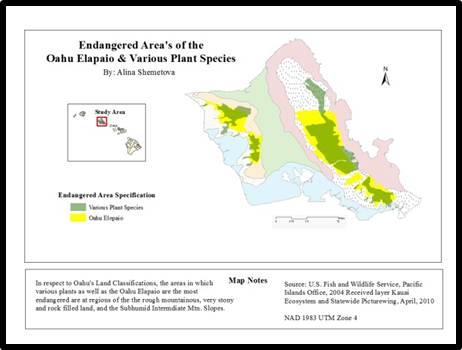
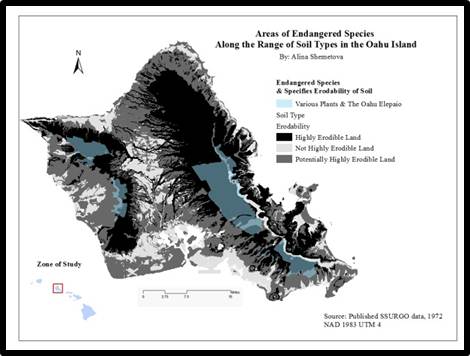
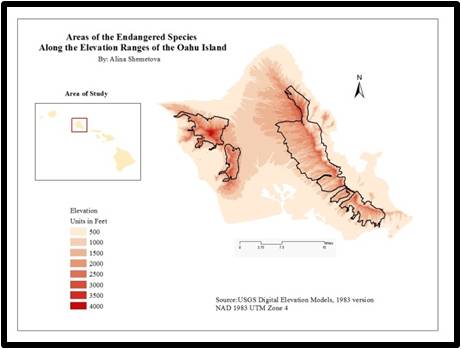
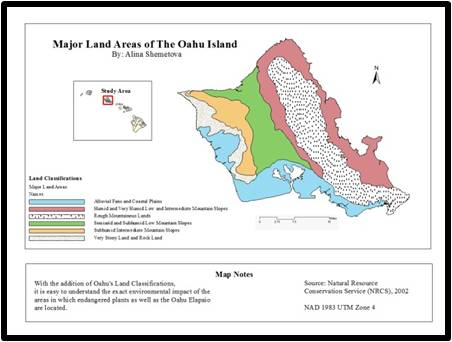
In
reference to the maps created through the help of ArcCatalog and ArcMap, this
project will enlighten the viewer of the correlation between the decline of
certain plant groups as well as the Oahu Elepaio and factors such as elevation,
erosion and land type. Perhaps when provided with a more analytical approach to
the dynamics behind the extinction of these species, anyone who might observe
Hawaii's unique organisms will be moved and even more aided to help defend
their right to exist.
